
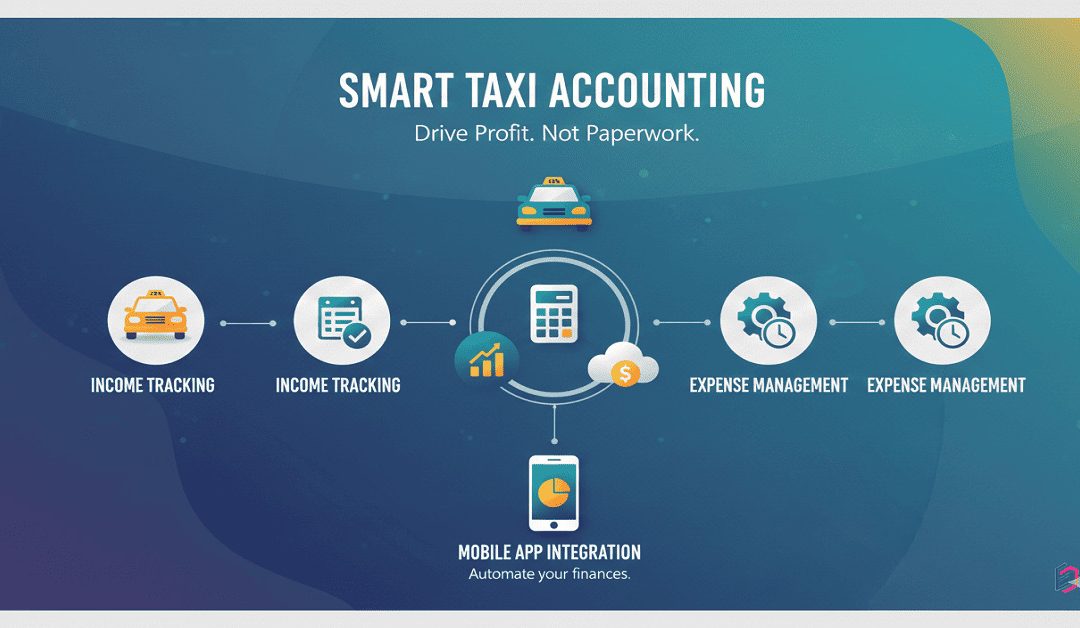
Accounting for taxi business in the UK isn’t just about filing a tax return—it’s about staying compliant with HMRC, understanding platform income, claiming the right expenses, and protecting your earnings from avoidable mistakes. Get it right, and your taxi business runs smoothly. Get it wrong, and penalties, missed reliefs, and cash-flow stress quickly follow.
Taxi drivers operate in one of the most closely monitored trades in the UK. Income often comes from multiple sources—cash, card, and apps like Uber or Bolt—while expenses are daily, vehicle-heavy, and time-sensitive. That’s why accounting for taxi business requires a specialist, HMRC-aware approach, not generic bookkeeping.
At Eternity Accountants, we work with UK taxi drivers every day—sole traders and limited companies—helping them simplify bookkeeping, meet HMRC deadlines, and gain real financial clarity. This guide explains exactly how accounting for taxi business works, what HMRC expects, and how to stay compliant while keeping more of what you earn.
Accounting for taxi business covers HMRC registration, accurate bookkeeping, allowable expense claims, VAT decisions, and compliant tax reporting—tailored specifically to taxi drivers, ride-hailing platforms, and UK tax rules.
Accounting for taxi business in the UK involves managing platform income, tracking vehicle expenses, meeting HMRC Self Assessment or company filing rules, and staying VAT-compliant. A taxi-specific accounting approach reduces errors, prevents penalties, and improves take-home profit for drivers.
What Is Accounting for a Taxi Business?
Accounting for taxi business is the process of recording income from fares and ride-hailing platforms, tracking vehicle and operating costs, complying with HMRC tax rules, and submitting accurate returns on time. It ensures taxi drivers remain compliant, maximise allowable claims, and maintain clear financial control.
This applies to sole trader taxi drivers, Uber/Bolt/Free Now drivers, and small taxi fleets operating in the UK—whether working independently or through digital platforms. Proper accounting protects taxi business income, supports growth, and reduces HMRC risk.
Accounting for taxi business covers income tracking, expense claims, VAT decisions, and HMRC reporting for taxi drivers. It applies to sole traders, app-based drivers, and small fleets, helping them stay compliant, reduce errors, and improve profitability under UK tax rules.
How Taxi Businesses Are Structured in the UK
Below is a comparative breakdown of the two main UK taxi business structures, designed to help drivers choose correctly from day one.
|
Structure |
Best Suited For |
Key Tax Features |
HMRC Registration Obligations |
|
Sole Trader Taxi Driver |
Independent drivers, Uber/Bolt drivers, part-time taxi work |
Income taxed via Self Assessment; Class 2 & Class 4 NICs |
The process involves registering with HMRC for Self Assessment, obtaining your UTR, and filing your annual tax return. |
|
Limited Company Taxi Business |
Full-time drivers, higher earners, small fleets |
Corporation Tax on profits; director salary/dividends planning |
Register company with Companies House, CT600 filing, PAYE if taking salary |
When Each Structure Makes Sense
- Sole trader suits drivers starting out or earning below higher tax thresholds with simpler accounting needs.
- Limited company suits growing taxi businesses needing tax efficiency, liability protection, or multi-vehicle operations.
Choosing the right structure is a core part of accounting for taxi business, as it directly affects tax bills, compliance workload, and long-term scalability.
Taxi Business Registration & HMRC Setup
Setting up accounting for taxi business correctly from day one prevents HMRC issues later. Below is a clear, numbered mini-guide used by UK taxi accountants to ensure full compliance without unnecessary complexity.
Register with HMRC and Obtain Your UTR
Every taxi driver must register with HMRC as soon as trading begins. Filing Self Assessment as a sole trader requires a Unique Taxpayer Reference, whereas a limited company uses its UTR for Corporation Tax submissions.Delays here are a common cause of penalties.
Complete Self Assessment (SA) Registration
This step forms the backbone of accounting for taxi business, as all income, expenses, and tax calculations flow through your SA return.
Open a Business Bank Account for Taxi Driver Income
Separating personal and business finances is essential. A business account for taxi drivers simplifies bookkeeping, supports accurate accounting for taxi business, and reduces HMRC scrutiny during reviews or enquiries.
Stay Ahead with Making Tax Digital (MTD)
Prepare for HMRC’s MTD for Income Tax, which mandates digital bookkeeping and submissions through compatible software.Taxi drivers should adopt compliant accounting software early to avoid rushed transitions and reporting errors.
Align HMRC Records with Local Council Licensing
Taxi licensing bodies and HMRC often cross-check records. Your trading name, address, and operating status must match council licence details to prevent compliance red flags within your accounting for taxi business.
Taxi business registration involves HMRC enrolment, obtaining a UTR, setting up Self Assessment, opening a business bank account, preparing for Making Tax Digital, and aligning records with local council licensing. Correct setup forms the foundation of compliant for taxi business in the UK.
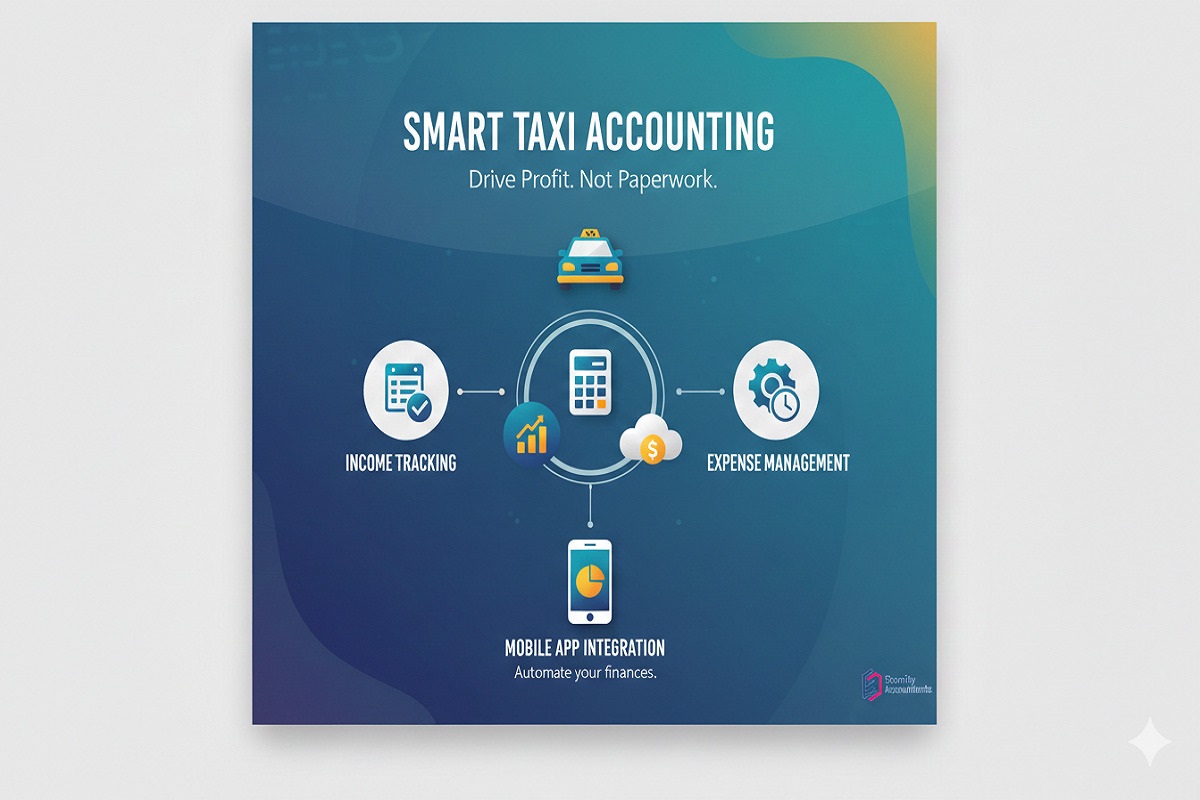
Bookkeeping for Taxi Businesses (Daily, Weekly, Monthly)
Accurate accounting for taxi business depends on disciplined bookkeeping. Instead of reacting at tax-return time, successful UK taxi operators follow a timeline-based workflow that keeps records HMRC-ready at all times.
Daily Tasks — Capture Everything as It Happens
Daily habits protect taxi drivers from missing income and disallowed expenses.
- Cash vs card income tracking: Log cash fares separately from card payments to avoid under-declaring turnover.
- Platform payouts: Record gross earnings from Uber, Bolt, and Free Now before commissions—not just the net deposits.
- Receipt capture best practice: Photograph fuel, repairs, and licensing receipts the same day using accounting software for taxi business.
Weekly Tasks — Reconcile and Review
Weekly checks keep bookkeeping clean and stress-free.
- Match platform statements to bank deposits for Uber, Bolt, and Free Now.
- Review mileage logs or vehicle cost records used in accounting for taxi business.
- Categorise expenses correctly to support accurate tax calculations.
Monthly Tasks — Stay HMRC-Compliant
Monthly routines prevent year-end surprises.
- Reconcile your business account for taxi driver income against records.
- Prepare VAT summaries if registered.
- Back up digital records and review profit trends.
Record Retention (HMRC Rules)
According to HMRC rules, taxi operators need to preserve accounting records for at least five years after the January 31st submission date.Digital storage is recommended under Making Tax Digital standards for modern taxi business accounting.
Taxi business bookkeeping works best on a daily-weekly-monthly system. Daily income capture, weekly platform reconciliation, and monthly bank checks ensure accurate accounting for taxi business. HMRC regulations, particularly Making Tax Digital, require you to keep your financial records in a digital format for a full five years.
Taxi Driver Expenses You Can Claim (HMRC-Approved)
Claiming the correct expenses is one of the fastest ways to improve accounting for taxi business results.Costs are deductible under HMRC rules only when they are wholly and exclusively for business use. The checklist below reflects common, HMRC-accepted claims used in professional accounting for taxi business.
HMRC-Approved Taxi Driver Expenses Checklist
| Expense Type | Claimable? | HMRC Guidance Notes |
| Fuel | ✔ Yes | Claim using mileage allowance or actual fuel costs, not both. Accurate logs support compliant accounting for taxi business. |
| Insurance | ✔ Yes | Taxi, public liability, and business vehicle insurance are allowable. Private-only cover is excluded. |
| Repairs & Servicing | ✔ Yes | Routine maintenance, tyres, and MOT costs are allowable when using actual cost method. |
| Licensing Fees | ✔ Yes | Local council taxi licences and DBS fees qualify as legitimate business expenses. |
| Phone & Data | ✔ Partial | Only the business-use percentage is allowable; personal usage must be excluded. |
| Accountancy Fees | ✔ Yes | Fees for professional accounting for taxi business, tax returns, and HMRC advice are fully deductible. |
Important HMRC Expense Rule
Expenses must be proportionate and evidenced. Mixed-use items (phone, vehicle, internet) require reasonable apportionment within your accounting taxi business records.
Taxi drivers can claim fuel, insurance, repairs, licensing fees, phone costs (business portion), and accountancy fees.To comply with HMRC, business expenses must be incurred exclusively for work, with digital documentation required. Correct expense claims are central to compliant accounting for taxi business.
Mileage Allowance vs Actual Vehicle Costs – Which Is Better?
Choosing the right method has a direct impact on tax bills and HMRC compliance in accounting for taxi business. Taxi drivers must pick one method per vehicle per tax year—and the wrong choice can quietly cost thousands.
Side-by-Side Comparison
| Criteria | Mileage Allowance Method | Actual Vehicle Costs Method |
| Tax impact | Simpler relief using HMRC rates (45p/25p). Often better for high-mileage taxi drivers. | Higher deductions possible for newer vehicles with high running costs. |
| Record-keeping burden | Low: mileage log only. Ideal for streamlined accounting for taxi business. | High: fuel, repairs, insurance, MOT, finance interest tracked and apportioned. |
| Long-term cost efficiency | Predictable and stable year to year. | Can fluctuate; better when costs spike (repairs, tyres). |
| HMRC compliance risks | Low if mileage logs are accurate and complete. | Medium if apportionment is poor or receipts are missing. |
Practical insight: Many drivers start with mileage, then switch when vehicles age or costs rise—your accountant should review this annually within your accounting for taxi business.
Mileage allowance suits high-mileage taxi drivers with simple records, while actual costs benefit those with higher vehicle expenses. You can only use one method per vehicle per tax year, and accurate records are essential for HMRC-compliant accounting taxi business.
UK VAT Regulations for Taxi Companies
Value Added Tax is often a complex and commonly misinterpreted aspect of taxi business accounting.Whether you must register depends on turnover, services provided, and how you invoice passengers or platforms.
Scenario-Based Guidance
Scenario 1: Turnover below the VAT threshold
If your taxable turnover is below the UK VAT threshold (£90,000), registration is optional. Many taxi drivers stay unregistered to keep fares competitive.
If Your Turnout Surpasses the Limit
Exceeding the VAT registration threshold makes signing up for VAT compulsory.Delays trigger penalties—this is a common HMRC issue in taxi trade accounting.
Scenario 3: Platform work (Uber/Bolt/Free Now)
VAT treatment depends on whether you’re contracting with passengers or the platform. Misclassifying this is a frequent and costly mistake in taxi business.
Flat Rate Scheme – Is it suitable?
The VAT Flat Rate Scheme can simplify reporting, but it’s not always cost-effective for taxi drivers with high input VAT. Specialist advice is essential.
Common VAT mistakes in taxi trade
- Registering late after crossing the threshold
- Charging VAT incorrectly on fares
- Using the wrong VAT scheme for platform income
Taxi businesses must register for VAT once taxable turnover exceeds £90,000. Platform income can complicate VAT treatment, and the Flat Rate Scheme isn’t always suitable. Correct VAT setup and timely registration are critical parts of compliant accounting for taxi business in the UK.
Essential Accounting Software for Taxi Businesses
Choosing the right software is now a compliance decision, not just a convenience—especially with MTD for ITSA approaching. For accurate accounting for taxi business, the software must handle mileage, platform income, VAT scenarios, and HMRC reporting without manual workarounds.
🇬🇧 UK Software Comparison (Taxi-Specific View)
| Software | Best For | Taxi-Specific Strengths | MTD for ITSA Ready | Limitations to Note |
| Xero | Growing taxi businesses | Strong bank feeds, mileage apps, platform integrations | Yes | Higher cost; learning curve |
| QuickBooks | Sole traders & owner-drivers | Easy expense capture, mobile receipts | Yes | Mileage tracking less flexible |
| FreeAgent | Contractor-style taxi drivers | Clear tax forecasts, simple dashboards | Yes | Fewer custom reports |
| Pandle | Cost-conscious drivers | Low cost, UK-based support | Yes | Limited automation features |
Expert insight: Software alone does not ensure compliance. A taxi specialist accountant configures categories correctly for accounting for taxi business, preventing HMRC errors caused by misposting income or expenses.
The best accounting software for taxi business in the UK includes Xero, QuickBooks, FreeAgent, and Pandle—all MTD for ITSA ready.The ideal option balances your company’s size, spending plan, and how you accurately record platform earnings and business miles for tax purposes.
Real UK Case Study – Taxi Driver Saving £3,800 in Tax
This real-world example highlights how specialist accounting for taxi business delivers measurable results—not just paperwork.
The Story (Mini Case Study)
Before using a taxi accountant
A self-employed London taxi driver handled his own returns using basic software. Mileage was underclaimed, platform fees were misclassified, and VAT exposure was unclear.
Errors discovered
- Incorrect mileage method used
- Missed allowable expenses (phone, licensing, repairs)
- Risk of late VAT registration identified
Actions taken
A taxi specialist accountant rebuilt records, corrected expense treatment, and implemented compliant accounting software aligned with accounting for taxi business best practices.
Tax & compliance outcome
- £3,800 tax saving for the year
- Clean HMRC position
- Future-ready setup for MTD for ITSA
A UK taxi driver saved £3,800 after switching to specialist accounting for taxi business. Correct mileage treatment, expense recovery, and VAT risk management reduced tax legally while ensuring full HMRC compliance and MTD readiness.
Common Accounting Mistakes Taxi Drivers Make
Even experienced drivers fall into avoidable traps that weaken accounting for taxi business and increase HMRC risk. Below is a warning-style list with micro-explanations—designed for fast scanning and high on-page clarity.
High-Risk Errors to Avoid
Mixing personal & business accounts
Blurred transactions make income unclear and invalidate expense claims. HMRC often flags this during reviews of taxi business accounting records.
Under-claiming legitimate expenses
Many drivers miss allowable costs like platform commissions, mobile data, or part-business vehicle use—leading to unnecessary tax overpayments.
Late filings & missed deadlines
Delays trigger penalties and interest, undermining otherwise solid accounting taxi business and damaging HMRC compliance history.
Wrong VAT decisions
Registering too late—or unnecessarily—creates cash-flow pressure and compliance exposure, especially for ride-hailing drivers.
Common taxi accounting mistakes include mixing personal and business finances, under-claiming expenses, late HMRC filings, and incorrect VAT decisions. These errors increase tax, penalties, and enquiry risk. Specialist accounting taxi business helps drivers avoid costly compliance failures.
A Guide to Choosing an Accountant for Your Taxi Business
Selecting an accountant is a strategic decision, not a price comparison. Use this decision checklist to assess whether an adviser truly understands accounting for taxi business.
Taxi Accountant Selection Checklist
Proven taxi-sector experience
Must understand mileage methods, platform payouts, and council licensing—not just generic self-employed accounts.
HMRC enquiry & compliance support
Look for representation during checks, not just return preparation.
Clear fixed pricing
Transparent monthly or annual fees prevent surprise costs and support predictable budgeting.
Local vs online capability
Online accountants suit app-based drivers nationwide; local firms help where council licensing rules are complex.
Expert note: The best taxi accountants combine software automation with sector insight—ensuring accounting for taxi business remains compliant, efficient, and tax-optimised year after year.
To choose the right accountant for a taxi business, prioritise taxi-sector experience, HMRC enquiry support, fixed pricing, and the right balance of local or online service. Specialist taxi business reduces risk, saves tax, and ensures long-term compliance.
Why Eternity Accountants Are Trusted by Taxi Businesses
Eternity Accountants are not generalists. We specialise in accounting for taxi business models across the UK—covering private hire drivers, Uber operators, and small taxi fleets. Our approach blends sector expertise with HMRC-first compliance, ensuring accuracy, resilience, and measurable tax efficiency.
What Sets Eternity Accountants Apart
Taxi-Specific Expertise
We understand the real mechanics behind accounting for taxi business income—platform payouts, mileage choices, licensing costs, and mixed cash/card takings. This insight allows precise reporting and stronger expense optimisation without compliance risk.
HMRC-First Compliance Approach
Every process is built around HMRC expectations—from record-keeping standards to Making Tax Digital alignment. This reduces enquiry risk and keeps taxi business accounting audit-ready at all times.
Fixed, Transparent Pricing
No hourly surprises. Our clear packages are designed specifically for accounting for taxi business needs, helping drivers budget confidently while receiving full professional coverage.
UK-Based Human Support
You deal with real UK accountants who understand local council licensing rules and HMRC procedures—not overseas call centres or automated-only systems.
Eternity Accountants are trusted by UK taxi businesses for their taxi-specific expertise, HMRC-first compliance approach, fixed transparent pricing, and UK-based human support. Their specialist accounting for taxi business reduces tax risk, improves accuracy, and delivers dependable long-term compliance.
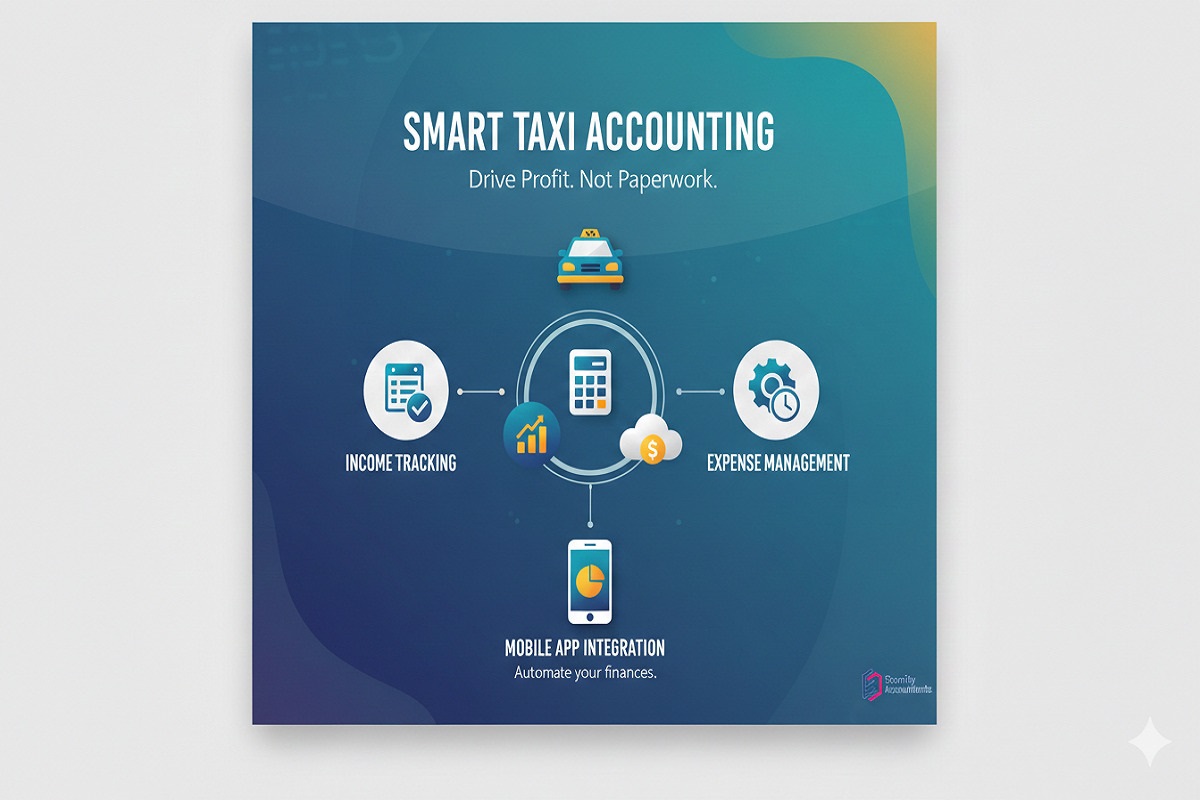
Quick Answers – Accounting for Taxi Business
- What does accounting for taxi business include in the UK?
Accounting for taxi business covers income tracking from fares and platforms, allowable expense claims, Self Assessment or company accounts, VAT decisions, and HMRC submissions. Proper taxi business accounting ensures accurate tax calculations, legal compliance, and better cash-flow visibility for drivers and fleet owners. - Is accounting for taxi business different from normal self-employed accounting?
Yes. Accounting for taxi business involves platform deductions, mileage vs actual cost decisions, licensing fees, and mixed cash/card income. Specialist taxi business accounting reduces errors that general self-employed setups often miss, especially around VAT and vehicle-related tax rules. - Do Uber and private hire drivers need professional taxi business accounting?
While not legally required, professional accounting for taxi business helps Uber and private hire drivers avoid under-claiming expenses, late filings, and HMRC penalties. Taxi business accounting specialists understand platform statements and HMRC reporting expectations far better than DIY methods. - How often should taxi business accounts be updated?
Effective accounting for taxi business requires regular updates—daily income capture, weekly reconciliations, and monthly reviews. This structure keeps taxi business accounting MTD-ready and prevents last-minute tax shocks at year end. - Can accounting for taxi business reduce tax legally?
Yes. Correct accounting for taxi business identifies allowable vehicle costs, platform fees, phone usage, and professional expenses. With structured taxi business accounting, drivers often reduce taxable profit while staying fully HMRC-compliant. - Is digital accounting mandatory for taxi businesses?
Digital record-keeping is increasingly essential. Accounting for taxi business must align with Making Tax Digital rules, especially for VAT-registered drivers and future ITSA requirements. Modern taxi business accounting software ensures compliance and smoother HMRC submissions.
Accounting for taxi business in the UK involves income tracking, expense optimisation, HMRC compliance, and digital reporting. Specialist taxi business accounting improves accuracy, reduces tax risk, and supports MTD readiness for Uber drivers, private hire operators, and small taxi fleets.
Voice Search FAQs – Taxi Business Accounting (UK)
- Should taxi drivers in the UK work with an accountant?
No, but specialist accounting for taxi business helps avoid HMRC errors and missed tax savings.
- Is Uber income taxed differently in the UK?
No, Uber income is taxed like other taxi income, but taxi business accounting must reflect platform deductions correctly. - Can taxi drivers claim mileage instead of fuel costs?
Yes, accounting for taxi business allows either mileage allowance or actual costs—whichever is more tax-efficient.
4.Do taxi drivers have to sign up with HMRC?
Yes, all taxi drivers must register for Self Assessment as part of proper taxi business accounting.
- When does a taxi business need to register for VAT?
When taxable turnover exceeds the VAT threshold, accounting for taxi business must include VAT registration. - Are taxi licensing fees tax deductible?
Yes, licensing costs are allowable expenses in taxi business accounting. - How long must taxi drivers keep records?
According to HMRC rules, taxi business owners need to keep accounting records for at least five years after submission. - Can taxi drivers use accounting software instead of spreadsheets?
Yes, modern accounting for taxi business software improves accuracy and MTD compliance. - What happens if taxi accounts are filed late?
Late filings can trigger penalties, interest, and HMRC scrutiny under taxi business accounting rules.
10.Can taxi businesses benefit from online accounting software?
Yes, online accounting for taxi business works well when managed by UK-based specialists who understand taxi regulations.
Final Summary – Accounting for Taxi Business Made Simple
Key Takeaways for Taxi Drivers & Small Fleets
Track Every Fare: Record cash, card, and platform (Uber, Bolt, Free Now) income promptly.
Claim All Eligible Expenses: Fuel, insurance, vehicle maintenance, licensing fees, phone, and accountant costs.
Vehicle Cost Strategy: Compare mileage allowance versus actual vehicle costs for optimal tax efficiency.
Stay VAT-Compliant: Monitor registration thresholds, evaluate Flat Rate Scheme suitability, and ensure MTD readiness.
Structured Bookkeeping: Maintain daily, weekly, and monthly bookkeeping routines to avoid errors.
Streamline with Digital Tools: Using software such as Xero, QuickBooks, FreeAgent, or Pandle makes managing your finances much easier.
Avoid Common Pitfalls: Mixing personal and business accounts, late filings, and under-claimed expenses can cost you.
Specialist Support Matters: A taxi-focused accountant ensures HMRC compliance, maximises tax savings, and provides peace of mind.
Important Note: Taxi business accounting is far simpler with the right approach.With clear processes, proper expense tracking, and expert guidance, you can save time, reduce tax liability, and focus on growing your business.
CTA –
Speak to a Taxi Business Accountant Today
Secure Your Finances & Maximise Tax Savings
Eternity Accountants offer specialist accounting for taxi business across the UK. Benefit from:
- UK-based expert support for drivers and small fleets
- Fixed, transparent pricing with no hidden fees
- HMRC-first compliance and MTD-ready bookkeeping
- Practical tax-saving strategies tailored for your taxi business
Act Now: Don’t leave your accounts to chance. Book a consultation today and ensure your taxi business is fully compliant, tax-efficient, and financially organised.
Call or Book Online – Get your taxi business accounting in expert hands today.