
If you run a limited company in the UK, understanding the cost of accountant for limited company services is no longer optional — it’s a financial decision that directly affects your tax efficiency, compliance risk, and long-term growth. Many directors overpay without realising it, while others underpay and face HMRC penalties, missed reliefs, or last-minute stress.
This guide is designed to give you clear, UK-specific answers. No vague estimates. No sales talk. Just practical insight into what a limited company accountant actually costs, what drives those fees, and how to judge whether you’re getting real value for money — especially if you’re a small business owner, contractor, or startup director navigating HMRC rules for the first time.
Most UK business owners searching this topic want a fast answer first — then detail.That’s where we’ll begin.
Direct Answer: How Much Do Accountants Charge for Limited Company Services?
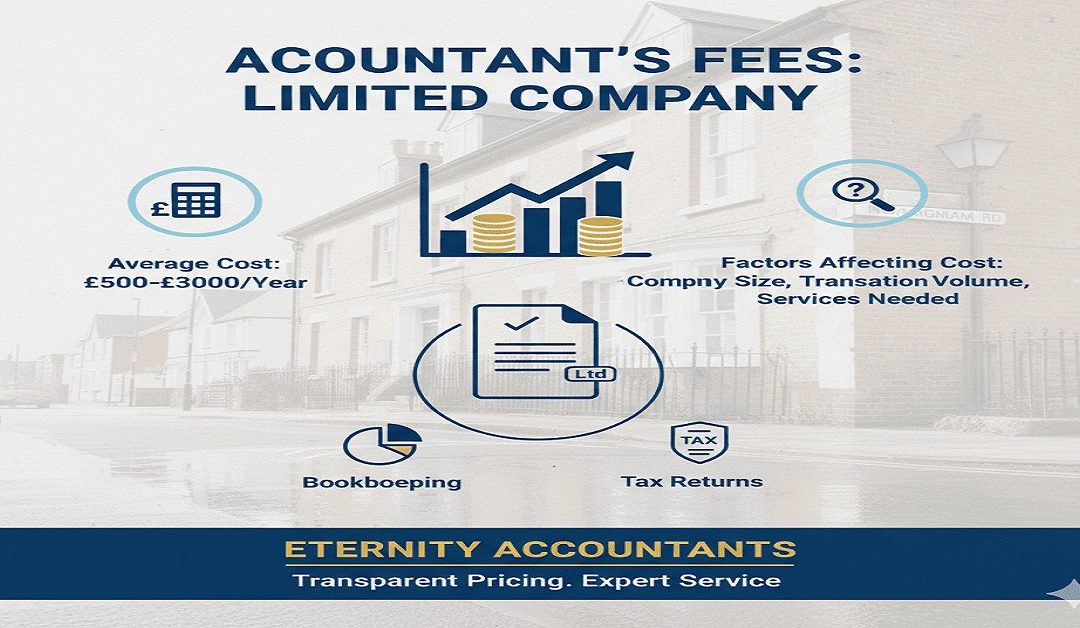
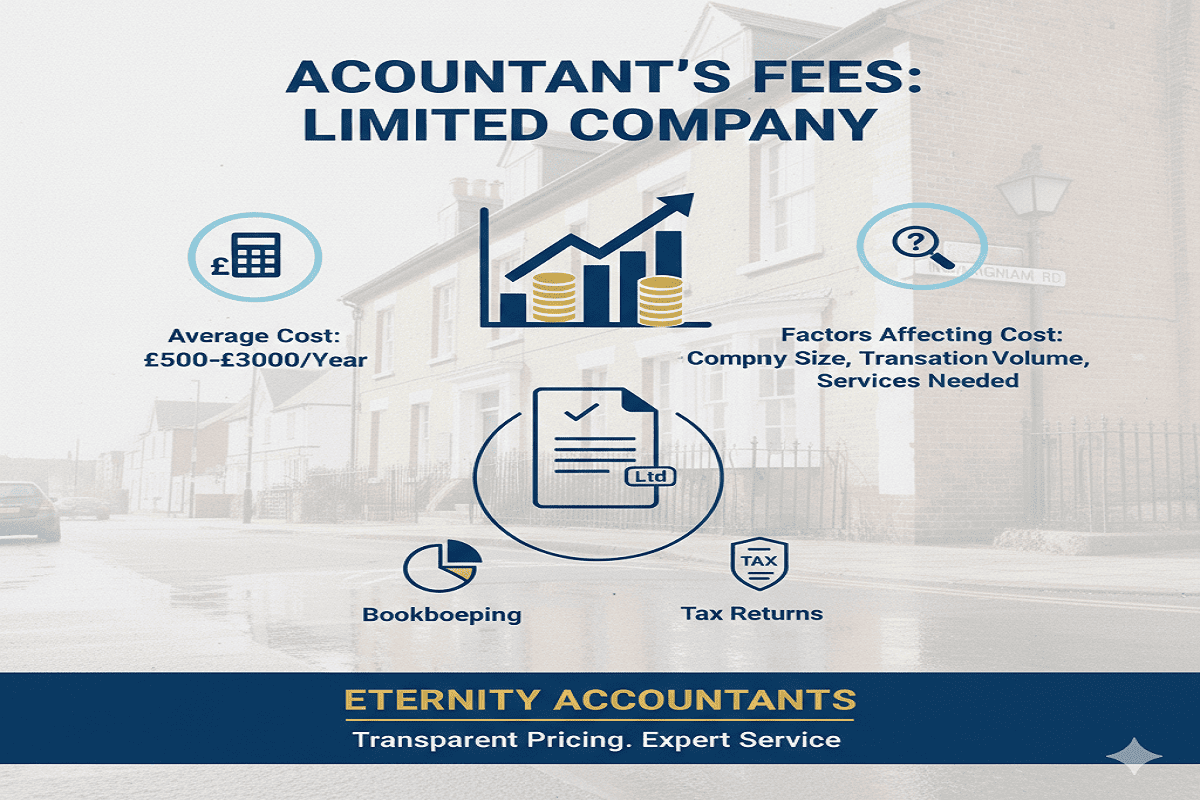
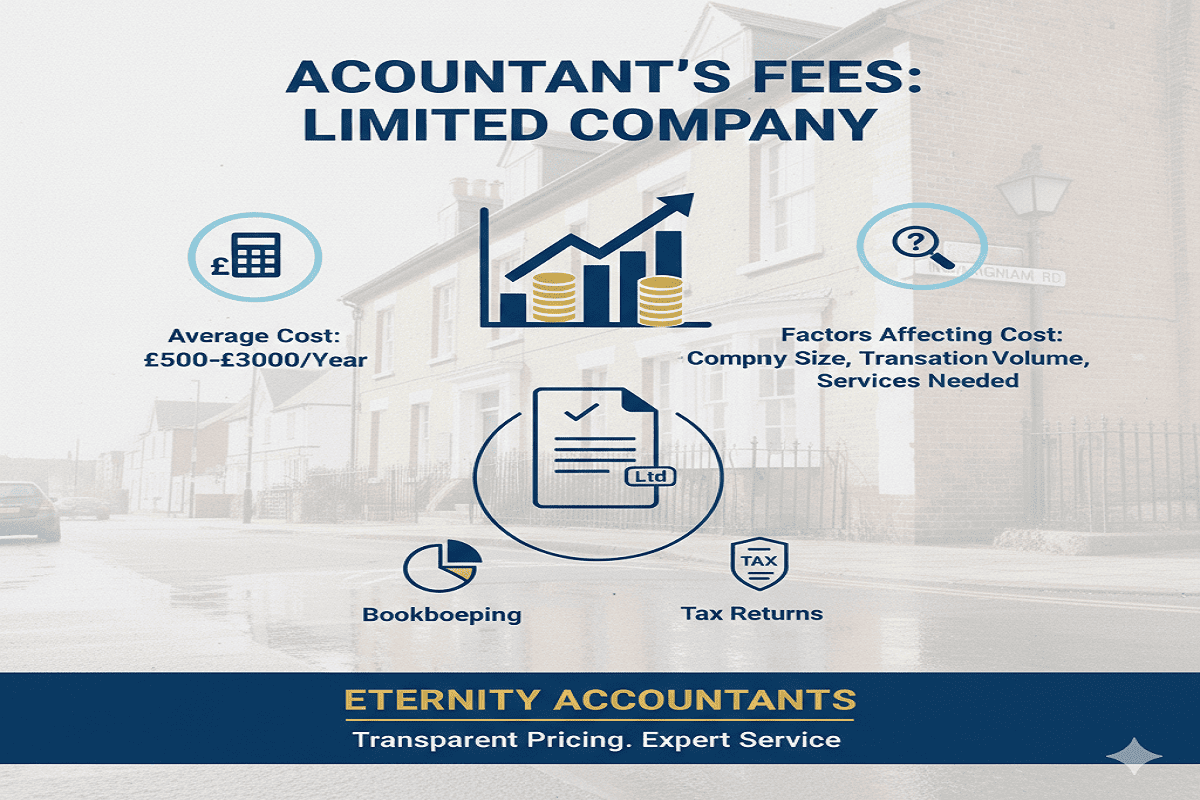
In the UK, the cost of accountant for limited company typically ranges from £600 to £1,500+ per year, depending on the size of the company, compliance needs, and level of ongoing support required.
Typical UK Price Range (2026)
- Small / low-activity limited companies: £600 – £900 per year
- Growing or VAT-registered companies: £900 – £1,200 per year
- Complex or advisory-led services: £1,200 – £1,500+ per year
This aligns with the average cost of accountant for limited company services across the UK market.
What Affects the Cost? (High-Level Overview)
The final fee is not random. It’s usually influenced by:
- Number of transactions (not turnover)
- Quality of bookkeeping records
- VAT registration and payroll needs
- Year-end accounts complexity
- Director tax planning requirements
- Level of HMRC compliance support
These same factors also explain variations in the average cost of accountant for limited company year end, which is often bundled into annual packages.
Most UK limited companies pay between £600 and £1,500 per year for an accountant, with costs rising based on compliance complexity, transaction volume, and advisory support.
Why Limited Company Accounting Costs More Than Sole Traders
Limited company accounting typically costs more than sole trader accounting because the business structure carries heavier legal and compliance obligations. A limited company exists as a separate legal entity, which means its financial records, tax filings, and reporting standards must meet stricter UK regulatory requirements. This greater complexity explains why accountant fees for limited companies tend to be more substantial.
Unlike sole traders, limited company directors must prepare statutory accounts that comply with Companies Act rules and submit them to Companies House alongside a Corporation Tax return to HMRC. Each submission must follow precise formats and deadlines, and directors remain legally responsible for accuracy. Accountants therefore spend more time reviewing figures, checking disclosures, and ensuring full compliance.
Director responsibilities also increase accounting workload. Most limited companies pay directors through a mix of salary and dividends, which requires payroll management, dividend documentation, and personal tax coordination. Mistakes in this area can lead to HMRC penalties, so accountants must apply careful tax planning rather than basic reporting. This is evident in the typical pricing for limited company accounting versus support for self-employed individuals.
Corporation Tax adds another technical layer. Decisions around allowable expenses, capital allowances, retained profits, and director loans must follow current UK tax rules. Accountants are expected to advise proactively, not just calculate figures, which raises both expertise and time requirements.
Finally, limited companies face greater HMRC scrutiny than sole traders. Compliance checks, filing reviews, and enquiry risks are higher, pushing accountants to carry out more detailed checks and maintain stronger audit trails. While this increases cost, it also provides protection, accuracy, and long-term tax efficiency for the business.
Limited company accounting costs more than sole trader accounting due to stricter legal duties, director tax complexity, Corporation Tax requirements, and higher HMRC compliance risk.
Average Cost of Accountant for Limited Company in the UK
The average cost of accountant for limited company services in the UK varies by support level, reporting complexity, and advisory depth. Rather than a single price, most firms offer tiered annual packages that align with how actively the business operates and how much HMRC-facing risk needs managing.
Comparison Table: Typical UK Pricing
|
Service Level |
Typical Annual Cost (UK) |
Best For |
|
Basic Compliance |
£600 – £900 |
Dormant or low-transaction companies needing statutory accounts and Corporation Tax only |
|
Standard Support |
£900 – £1,500 |
Small trading companies with regular expenses, director payroll, and dividend planning |
|
Growth-Focused Package |
£1,500 – £2,500 |
Scaling businesses needing VAT, MTD compliance, management accounts, and advice |
|
Full Advisory & CFO-Style |
£2,500+ |
Complex structures, multiple directors, cashflow planning, and proactive tax strategy |
What this means in practice: the cost of accountant for limited company rises as reporting frequency, tax planning, and compliance risk increase. Paying more often reflects broader protection, clearer financial insight, and fewer HMRC surprises—rather than just extra paperwork.
The average cost of accountant for limited company in the UK ranges from £600 to £2,500+ per year, depending on service level, transaction volume, and advisory needs.
Monthly vs Annual Accountant Fees: Which Option Delivers Better Value?
Choosing between monthly and annual pricing significantly affects the cost of accountant for limited company services over time. While both models are common in the UK, they serve very different business needs depending on activity level, risk tolerance, and compliance complexity.
Value Comparison by Outcome
Monthly Fee Model
A monthly arrangement turns the cost of accountant for limited company into a predictable operating expense. This model supports continuous oversight, allowing issues to be identified before they escalate into penalties or missed reliefs. It is especially effective for VAT-registered companies, directors taking dividends, or businesses expecting growth.
Annual Fee Model
An annual fee typically suits dormant or very low-transaction companies. While the upfront cost may appear lower, compliance is handled retrospectively, which increases exposure to filing pressure and missed planning opportunities. Additional advice or HMRC interaction is often charged separately.
Value Perspective:
For most active UK limited companies, monthly pricing provides stronger long-term value by combining financial predictability with proactive compliance management.
Monthly accountant fees reduce compliance risk and improve cost predictability, while annual fees work best only for simple, low-activity limited companies.
What Services Are Covered in a Typical Limited Company Accountant’s Fee?
Understanding what sits behind the cost of accountant for limited company services is essential for judging value accurately. A compliant UK limited company must meet multiple statutory and tax obligations, and a proper accounting package should reflect that scope.
Standard Inclusions You Should Expect
✔ Statutory Year-End Accounts – prepared in line with UK reporting rules
✔ Corporation Tax Filing – calculation and submission to HMRC
✔ Confirmation Statement Support – Companies House compliance assistance
✔ Director Tax Efficiency Planning – dividends, salary structure, allowances
✔ HMRC Correspondence Handling – professional response to notices or queries
More comprehensive packages may also include VAT submissions, PAYE processing, bookkeeping reviews, and ongoing advisory support—elements that materially influence the real cost of accountant for limited company services beyond headline pricing.
A limited company accountant’s cost usually covers accounts, Corporation Tax, confirmation statements, director tax planning, and HMRC support—ensuring full UK compliance.
Year-End Accounts Cost: What Directors Often Underestimate
Many directors assume year-end accounts are a simple, one-off task. In reality, year-end work pulls together statutory reporting, Corporation Tax accuracy, and HMRC compliance—all under strict time pressure. This is why the average cost of accountant for limited company year end is often higher than expected, especially when records are incomplete or deadlines are tight.
Year-end accounts also act as the foundation for dividends, tax planning, and future funding discussions. Any mistake here can cascade into personal tax issues for directors.
Warning Callout: Where Costs Quietly Increase
Deadlines
Missing Companies House or HMRC deadlines leads to rushed work, premium fees, and avoidable stress.
Penalties
Late or inaccurate filings can trigger fines, interest, and increased HMRC attention—costs not always included in the original quote.
Hidden Time Costs
Director time spent chasing documents, correcting errors, or responding to HMRC queries often exceeds the visible average cost of accountant for limited company year end.
Year-end accounts cost more when deadlines are missed, records are poor, or director tax planning is left too late—factors many limited company directors underestimate.
Factors That Increase or Reduce Accountant Costs
Infographic-Style Cost Drivers (At a Glance)
Transaction Volume
More monthly transactions increase review time and reconciliation work, directly affecting annual fees.
VAT Registration
VAT returns, Making Tax Digital compliance, and HMRC checks add complexity and raise the overall cost.
Payroll Requirements
Running PAYE for directors or staff introduces RTI submissions, pensions, and compliance checks.
Bookkeeping Quality
Clean, up-to-date records reduce billable time; messy books almost always push costs higher.
Software Usage
Using modern cloud accounting software lowers processing time and helps control the cost of accountant for limited company services.
Each factor compounds the others. For example, high transaction volume combined with poor bookkeeping creates one of the most expensive scenarios for UK limited companies.
Accountant costs rise with transaction volume, VAT, payroll, and poor bookkeeping—but drop when digital tools and clean records are used consistently.
Real UK Case Example: How One Director Cut Fees by £900
Mini Case Study (UK Limited Company)
Business Type
A London-based IT consultancy operating as a single-director limited company with steady monthly invoicing.
Original Problem
The director was paying high annual fees due to disorganised bookkeeping, late document submission, and paying separately for year-end adjustments.
Changes Made
The accountant introduced cloud bookkeeping, aligned services into a fixed annual package, and scheduled quarterly check-ins instead of reactive support.
Result
The director reduced the overall cost of accountant for limited company services by £900 in one year, while improving compliance and cash-flow visibility.
UK directors reduce accountant costs by improving bookkeeping quality and switching to transparent annual packages.
Is a Cheap Accountant a Risk for Limited Companies?
Expert Insight Commentary
A low-fee accountant may appear attractive, but limited companies face risks that go far beyond basic form-filling. When services are priced too cheaply, essential compliance and advisory work is often excluded or rushed.
HMRC penalties are one of the most common consequences. Incorrect Corporation Tax calculations, late submissions, or missed disclosures can trigger fines and interest—costs that far exceed the initial saving. Cheap services also tend to overlook proactive tax planning, meaning directors miss legitimate reliefs and dividend strategies that reduce personal and company tax exposure.
Most importantly, director liability remains personal. Even when an accountant makes a mistake, the director is still legally responsible. This is why experienced advisers view value, oversight, and accountability as more important than headline price when assessing the cost of accountant for limited company arrangements.
A cheap accountant can increase HMRC risk, reduce tax efficiency, and expose directors to personal liability.
How to Reduce the Cost of an Accountant (Legally)
Actionable Cost-Reduction Steps (Director-Focused)
- Move to digital bookkeeping early
Keeping records digitally throughout the year reduces clean-up work at year-end, which directly lowers the cost of accountant for limited company services.
- Use cloud accounting software consistently
Tools like Xero or QuickBooks allow accountants to work efficiently, flag issues early, and avoid time-based correction charges.
- Choose a monthly fixed package
Monthly packages spread costs evenly, prevent surprise invoices, and usually cost less overall than ad-hoc billing for limited companies.
- Define the service scope clearly
Confirm what’s included—Corporation Tax, year-end accounts, director tax planning, and HMRC queries—to avoid unexpected add-ons.
UK directors reduce accountant costs legally by improving systems, using cloud tools, and choosing fixed monthly packages.
Cost Checklist: Is Your Accountant Worth What You Pay?
Tick-Box Value Assessment (Limited Company Owners)
✔ Proactive advice – Do they warn you about tax issues before deadlines, not after?
✔ Fixed pricing clarity – Is your annual cost agreed upfront with no hidden extras?
✔ HMRC support – Will they deal with HMRC queries and notices on your behalf?
✔ Tax efficiency focus – Are dividends, expenses, and allowances actively reviewed?
✔ Limited company expertise – Do they specialise in directors and UK company rules?
✔ Accessible communication – Can you get timely answers without extra charges?
If you can’t tick most of these boxes, the cost of accountant for limited company services may be poor value—even if the fee looks low.
An accountant is worth the cost when they prevent problems, improve tax efficiency, and provide fixed, transparent pricing.
Voice Search Answers: Limited Company Accountant Costs
- How much does a limited company accountant cost per month?
Typically between £50–£150/month for small businesses, depending on services and bookkeeping complexity.
- Should a limited company hire an accountant?
While not legally required, an accountant helps with Corporation Tax, VAT, dividends, and HMRC compliance.
- What’s the cheapest legal option?
Monthly digital packages with cloud bookkeeping reduce costs legally without risking compliance.
- Can I file year-end accounts myself?
Yes, but mistakes can lead to HMRC fines; a professional accountant often saves money long-term.
- Do director responsibilities affect cost?
Yes, directors must submit personal and company taxes, increasing accountant involvement and fees.
- How does VAT registration affect costs?
VAT-registered companies require additional filings, raising average cost of accountant for limited company.
- Are hourly fees cheaper than annual packages?
Hourly rates may seem lower but often add up; fixed monthly or annual fees provide better predictability.
- Will I save money by hiring a “cheap” accountant?
Low-cost accountants may miss tax-saving opportunities or make errors, increasing HMRC risk.
- How much should startups budget for accounting?
Small limited companies usually budget £600–£1,200 per year for full compliance and support.
- Can cloud accounting reduce fees?
Yes, digital bookkeeping enables accountants to work efficiently, often lowering the total annual cost.
Limited company accounting costs vary by service, director responsibilities, and VAT status; fixed monthly or annual packages often offer the best value.
Why Eternity Accountants Offer Better Value (Not Just Lower Cost)
At Eternity Accountants, we focus on value beyond price. Our services combine deep UK compliance expertise with fixed, transparent pricing to protect your business. Each client is assigned dedicated advisors who proactively manage tax planning, year-end accounts, and HMRC correspondence. Unlike budget firms, we prioritise long-term savings and risk mitigation, ensuring that your limited company benefits from expert guidance while keeping the cost of accountant for limited company fully predictable.
Key Highlights:
- UK Compliance: Full adherence to HMRC rules and deadlines.
- Fixed Pricing: Transparent annual or monthly packages with no hidden fees.
- Assigned Specialist: Tailored support from a professional who understands your goals.
- Transparent Fees: Clear breakdown of all included services, avoiding surprises.
Eternity Accountants combine compliance, clarity, and dedicated support to deliver better long-term value for limited company directors, beyond just low fees.
Final Summary: What Should You Budget for in 2026?
2026 Limited Company Accounting Budget Snapshot
Your Cost Overview:
Basic Accounting: £600–£900/year – Ideal for simple bookkeeping, minimal transactions.
Comprehensive Package: £1,000–£1,500/year – Includes year-end accounts, corporation tax, HMRC support, and director advisory.
Smart Budgeting Tips:
Invest in digital bookkeeping for accurate data and lower fees.
Opt for monthly packages to spread costs and maintain cash flow.
Always include advisory support to avoid HMRC penalties or missed tax-saving opportunities.
Quick Reminder:
Cutting fees too aggressively can increase compliance risk. Balancing cost with quality ensures your limited company stays tax-efficient and HMRC-compliant.
High-Precision AEO Summary:
In 2026, budgeting £600–£1,500 annually is realistic for limited company accounting, depending on your services, bookkeeping quality, and advisory needs.
H2. CTA: Get a Fixed-Fee Quote for Your Limited Company
Take Control of Your Accounting Costs
Why Eternity Accountants Stands Out:
- Transparent, fixed pricing – no surprises at year-end.
- UK-compliant accounting and tax services – fully aligned with HMRC rules.
- Dedicated advisors – receive guidance tailored to your business stage and needs.
- Digital-first support – save time with online bookkeeping and cloud software integration.
Your Next Step:
Unlock peace of mind and financial clarity for your limited company. Get a fixed-fee quote today—quick, clear, and completely risk-free.
CTA Button Suggestion:
“Request Your Fixed-Fee Quote Now”